Celtic Cross Position 1 — Majors vs Minors (How the Tone Changes)
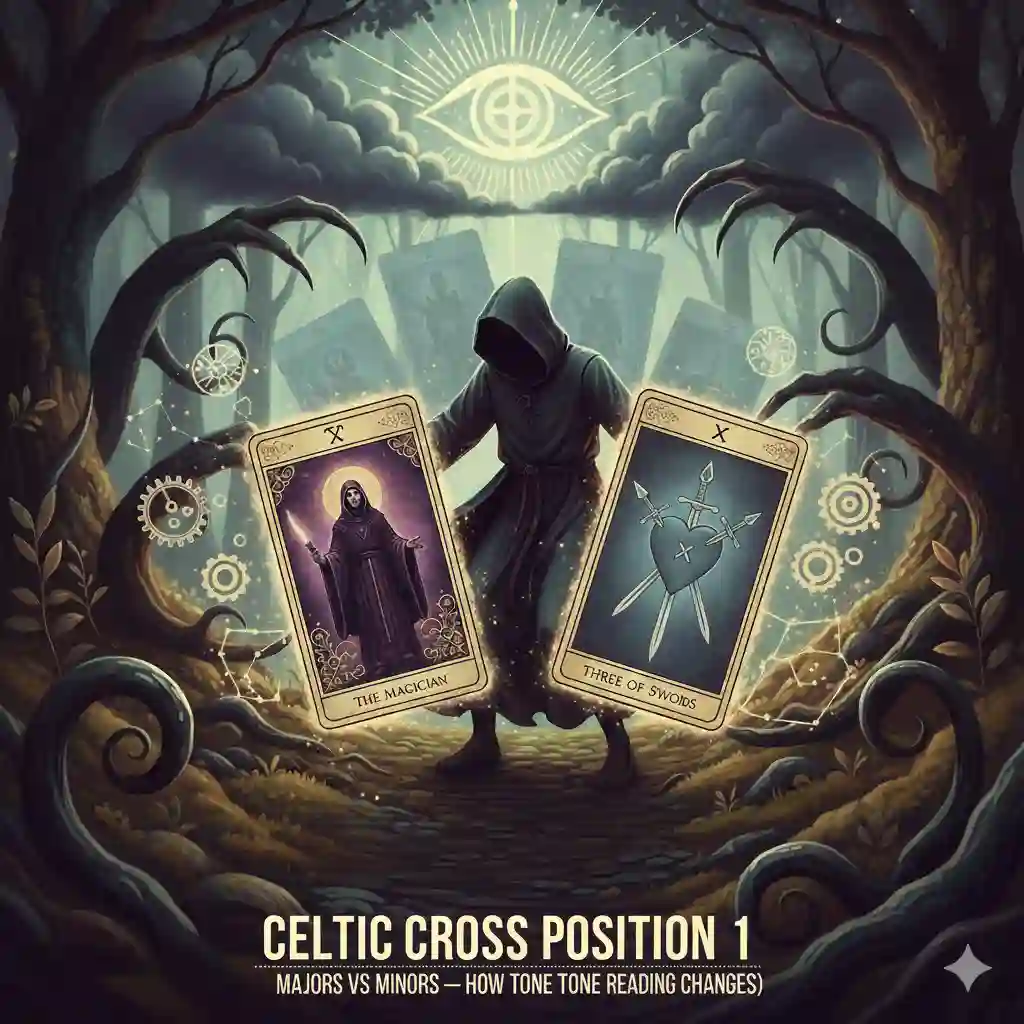
In a Celtic Cross reading, Position 1 represents the core of the situation, setting the energetic tone for the entire spread. A Major Arcana card in this position signals a destiny-level theme, a profound life lesson, or a karmic cycle at play. This indicates that the querent is experiencing a situation that is shaping their identity and spiritual path. Conversely, a Minor Arcana card points to a more temporary, situational issue driven by circumstances, behaviors, or emotional states. Understanding this distinction is critical; a reader must adjust their interpretation style, as misinterpreting a fated event as a simple problem, or a temporary issue as a life-altering crisis, can distort the guidance of the entire reading.
The first position of the Celtic Cross is frequently misunderstood, often reduced to a simplistic label like “the present situation.” While not entirely incorrect, this interpretation barely scratches the surface of its profound significance. This card is not merely a snapshot of current events; it is the energetic seed of the entire spread, the heart of the matter from which all other cards draw their context. It is the lens through which every other position—the crossing challenge, the past, the future, the conscious mind—must be viewed. The core premise we will explore is that the type of card that falls here dramatically alters the reading’s entire energetic signature. A Major Arcana in Position 1 speaks in the language of destiny, soul contracts, and profound life lessons, while a Minor Arcana speaks in the language of circumstance, emotional reactions, and manageable challenges. The tone, gravity, and spiritual weight of the reading shift dramatically depending on which type of card occupies this vital space, and a discerning reader must learn to shift with it.
Table of Contents
- Understanding Celtic Cross Position 1 (The Core of the Situation)
- When a Major Arcana Appears in Position 1
- Psychological Tone of Majors in Position 1
- Spiritual Tone of Majors in Position 1
- When a Minor Arcana Appears in Position 1
- Emotional Tone of Minors in Position 1
- Practical Tone of Minors in Position 1
- Majors vs Minors — How the Entire Reading Tone Shifts
- Examples — Same Question, Different Tone
- How to Adjust Your Interpretation Style as a Reader
- Celtic Cross Position 1 in Love, Career, and Spiritual Readings
- Frequently Asked Questions
- Conclusion
Recognizing the card type in this central position is the first step toward a nuanced, intuitive interpretation. This distinction allows a reader to gauge the scale and depth of the issue at hand, preparing them to deliver guidance that is not only accurate but also appropriately framed for the querent’s experience.
Understanding Celtic Cross Position 1 (The Core of the Situation)
Position 1 is the emotional and energetic nucleus of the reading. It represents the querent’s present reality at its deepest level, revealing the core situation or internal state that is generating the need for guidance. This is not about surface symptoms, like an argument with a partner or a difficult day at work. Instead, it uncovers the foundational energy beneath those symptoms—the fundamental pattern, lesson, or circumstance that is the true subject of the reading. For this reason, experienced readers learn to anchor the entire reading here. Every other card in the spread, from the challenge in Position 2 to the final outcome in Position 10, is a commentary on or a development of the theme established in Position 1. A common beginner mistake is to interpret each card in isolation, failing to see how Position 1 colors their meaning. For example, a challenging card in the “hopes and fears” position means something very different when the core situation is The Tower versus when it is the Four of Wands. For a full exploration of all ten positions, our celtic-cross-tarot-spread-guide offers a comprehensive overview. The card here sets the stage, defines the stakes, and provides the essential context for everything that follows.
This initial insight into the core dynamic is crucial because it frames the nature of the querent’s journey. Before we even look at challenges or outcomes, we must understand the very ground on which the querent is standing. Is it solid ground, shifting sand, or a sacred path they were destined to walk?
When a Major Arcana Appears in Position 1
When a Major Arcana card lands in the first position of the Celtic Cross, the reading immediately elevates from the mundane to the archetypal. This signals that the querent is not just dealing with a “problem” but is engaged with a significant life lesson, a karmic cycle, or a fated event. The core situation is tied to their soul’s journey and personal evolution. These energies tend to feel unavoidable or destined because they are part of a larger, divine curriculum. The situation overrides small, situational details; the universe is asking the querent to focus on a major theme. For instance, if The Fool is here, the core energy is about a leap of faith and a new life cycle, regardless of the practical fears that may surface. If it’s The Wheel of Fortune, the central theme is a major turning point governed by destiny. While free will still operates, it functions within the framework of this larger lesson. The querent has a choice in how they engage with the energy, but not if they engage with it. This brings an emotional weight and spiritual pressure to the reading. The querent is being fundamentally shaped by the situation, not merely reacting to it, and any advice given must be interpreted with this gravity in mind.
Psychological Tone of Majors in Position 1
The psychological tone of a Major Arcana in Position 1 is one of profound internal shifting. The themes are often at the identity level, forcing the querent to question who they are, what they believe, and where they are going. This can manifest as an ego shift, where old self-concepts are dismantled, or a major awakening, where a new level of consciousness is being born. The situation is not just happening to them; it is happening for their psychological development. Whether it’s The Hermit calling for deep introspection or The Tower demanding a radical breakdown of false structures, the work is internal. Emotions feel heavier and more intense because they are connected to soul contracts and deep-seated patterns, not just fleeting moods. The querent may report feeling that something “big” is happening, even if they can’t name it. The reading, therefore, must address this deep psychological undercurrent, helping the querent understand the internal transformation they are undergoing.
Spiritual Tone of Majors in Position 1
Spiritually, a Major Arcana in this position speaks the language of divine timing and karmic cycles. The situation at hand is a lesson that has arrived because the querent is spiritually ready to face it, or because it is a recurring theme that must be mastered before they can move forward. This can feel like a spiritual initiation, a test, or a sacred contract playing out. There is often a sense that resistance creates more suffering; the path of least resistance involves surrendering to the lesson and trusting the process. The Hierophant may signal a lesson in spiritual structure and tradition, while The Star suggests a period of healing and renewed faith after a dark night of the soul. The querent is being guided, protected, and challenged by forces larger than themselves. A reader’s role here is to illuminate the spiritual purpose of the situation, framing it not as a punishment but as an opportunity for profound growth. The Major Arcana represents the pillars of the human experience, and its appearance here signifies that the querent is engaging with one of these fundamental life truths.
The presence of a Major Arcana card demands a different level of respect and a deeper interpretive lens. Now, let’s consider how the entire energetic field of the reading shifts when a card of a different suit appears in this crucial first position.
When a Minor Arcana Appears in Position 1
When a Minor Arcana card appears in Position 1, the tone of the reading becomes more grounded, immediate, and manageable. This indicates that the core of the situation is rooted in the day-to-day fabric of life: temporary challenges, situational dynamics, emotional states, or behavioral patterns. These are the experiences born of circumstance and personal choice. While they can be intensely felt—a heartbreak represented by the Three of Swords is deeply painful—they are not typically driven by the same fated, soul-level energy as the Major Arcana. The power is more squarely in the querent’s hands. The issues are things they are navigating, not cosmic forces they are being navigated by. A Minor Arcana here suggests that change, relief, or resolution is possible through practical action, shifts in perspective, or emotional processing. The querent has a high degree of agency to influence the outcome. They are actively navigating circumstances, not surrendering to destiny.
Emotional Tone of Minors in Position 1
The emotional tone of a Minor Arcana in the first position is often connected to mood-based issues, stress cycles, and interpersonal dynamics. The suit of the card provides immediate clues: Cups point to matters of the heart and emotional wellbeing; Swords indicate mental conflict, anxiety, and communication issues; Wands relate to passion, motivation, and creative energy; and Pentacles concern matters of security, work, and physical health. These emotions are powerful, but they are often reactions to external events or internal thought patterns rather than deep, soul-level reckonings. For example, the Five of Cups reflects a state of grief and focusing on loss, while the Nine of Swords points to anxiety and sleepless nights. The reader’s role here requires empathy to validate these very real feelings, while also empowering the querent to see them as states that can be moved through, rather than permanent conditions.
Practical Tone of Minors in Position 1
The practical tone of a Minor Arcana here is one of problem-solving. These cards invite us to look at actionable steps and short-term decisions. The situation is often influenced by the querent’s environment, their habits, and the choices they make on a daily basis. The Seven of Pentacles in Position 1 suggests a moment of reflection on an investment of time or energy, asking for a practical assessment of progress. The Eight of Wands points to rapid communication or swift events that require a quick, tactical response. This is where the tarot becomes an excellent tool for advice and timing. The reading can focus on “what to do next” in a very concrete way. Because the querent is dealing with the manageable aspects of life, the guidance can be direct and empowering. A reader helps the querent identify the levers of change within their control, highlighting their power to alter their circumstances. The full spectrum of these daily experiences is captured within the Minor Arcana.
Understanding the fundamental difference between a Major and Minor Arcana in this position is key to unlocking the true narrative of the Celtic Cross. The contrast is not one of importance, but of scope, agency, and energetic source, which in turn reshapes the meaning of every other card in the spread.
Majors vs Minors — How the Entire Reading Tone Shifts
The contrast between a Major and Minor Arcana in Position 1 changes everything about the reading’s tone, from its perceived urgency to the reader’s ultimate responsibility. When a Major Arcana is present, the tone is one of fate and long-term evolution; the focus is on “being” and “becoming.” There’s an undeniable emotional gravity to the situation. The reading becomes less about “how do I fix this?” and more about “what am I meant to learn from this?” With a Minor Arcana, the tone shifts to one of choice and manageability. The focus is on “doing” and “navigating.” The situation is more about short-term circumstances, and the emotional weight, while potentially heavy, is circumstantial rather than existential. Ignoring this difference leads to significant interpretive errors. A reader might induce panic by treating a Minor Arcana issue (like the Seven of Swords) with the fatalistic gravity of a Major (like The Tower), creating false urgency. Conversely, they might dilute the profound significance of a Major Arcana lesson (like The Hierophant) by offering simple, practical fixes, thereby minimizing a crucial opportunity for soul growth. The reader’s responsibility shifts as well. With Majors, the reader is a spiritual guide, helping the querent align with a larger cosmic flow. With Minors, the reader is a practical strategist, helping the querent make effective choices. Recognizing this shift from the very first card is what separates a mechanical reading from a truly insightful one.
Examples — Same Question, Different Tone
Let’s explore how the tone changes for the same question based on the card in Position 1. Imagine the querent asks, “What is at the heart of my current relationship struggles?”
- Position 1 = The Tower vs. Five of Pentacles:
- The Tower (Major): The core of the issue is a fundamental, unavoidable collapse of the relationship’s structure. This is a destined event meant to shatter illusions and false foundations. The tone is one of radical, non-negotiable change. Advice would focus on surrender, safety, and understanding that this breakdown is necessary for a more authentic life, not on “fixing” the current dynamic.
- Five of Pentacles (Minor): The core of the issue is a feeling of emotional or financial abandonment, insecurity, and being “left out in the cold.” This is a situational crisis. The tone is one of hardship and perceived lack. Advice would focus on identifying the source of this insecurity, seeking support, and taking practical steps to rebuild a sense of shared security and belonging.
- Position 1 = The Lovers vs. Two of Cups:
- The Lovers (Major): The core of the situation is a profound choice about values, alignment, and the very definition of partnership. This is a soul-level decision that will shape the querent’s identity. The tone is one of a major life crossroads. The advice is to look beyond romantic feelings and make a choice that aligns with one’s deepest personal truth.
- Two of Cups (Minor): The core of the situation is a beautiful, reciprocal emotional connection. The energy is one of partnership, attraction, and mutual understanding. The tone is one of harmony and relationship potential. The “struggle” may be an external factor challenging this pure connection, and the advice would be to nurture this bond and protect it.
- Position 1 = Death vs. Ten of Swords:
- Death (Major): The core of the situation is a necessary and natural ending of a major chapter. This is an organic, transformative process of shedding an old self to make way for the new. The tone is one of inevitable transition. Advice would focus on letting go gracefully and accepting the end as a vital part of a cycle, not a failure.
- Ten of Swords (Minor): The core of the situation is a painful, dramatic ending, often accompanied by a sense of betrayal, victimhood, or hitting rock bottom. This is a mindset of total defeat. The tone is one of mental crisis and melodrama. While the pain is real, the advice would focus on understanding that this is the end of a thought cycle, and the querent has the power to stop identifying with the victim narrative and choose to get up.
How to Adjust Your Interpretation Style as a Reader
As a reader, your entire delivery must adapt to the card in Position 1. This is a matter of both technical skill and ethical responsibility. With a Major Arcana, your language should shift to encompass broader, more spiritual concepts like “lesson,” “cycle,” “purpose,” and “alignment.” The pacing of the reading may slow down to allow space for these heavy themes to land. Your emotional framing should be one of profound respect for the querent’s journey, validating the weight they feel. Ethically, you must avoid absolutism; even with fate, the querent has a choice in their response. Your role is to empower them to meet their destiny consciously.
Conversely, with a Minor Arcana, your language becomes more practical and grounded. You can use words like “situation,” “pattern,” “choice,” and “strategy.” The pacing can be more direct and solution-oriented. The emotional framing is one of empathetic problem-solving, acknowledging the difficulty while highlighting the querent’s agency. The ethical responsibility here is to avoid minimization. Just because an issue is temporary doesn’t mean it isn’t painful. Validate their feelings while gently guiding them toward actionable steps and empowering perspectives. This ability to modulate your style is a hallmark of an advanced and compassionate reader.
Celtic Cross Position 1 in Love, Career, and Spiritual Readings
The Major vs. Minor distinction provides specific insights across different areas of life.
- Love:
- Majors: A Major Arcana in Position 1 points to soul lessons being learned through relationships. This could be a karmic bond (The Devil), a destined partnership (The Lovers), or a period of solitary soul-searching (The Hermit) that is essential for future love. The focus is on the purpose of the connection, not just its status.
- Minors: A Minor Arcana points to the relational dynamics themselves. The Two of Cups shows a beautiful connection, the Five of Swords points to toxic conflict, and the Nine of Pentacles might indicate a period of happy singlehood and independence. The focus is on the current emotional and behavioral patterns within the relationship.
- Career:
- Majors: A Major Arcana here speaks to one’s true calling and life path. The Wheel of Fortune can signal a major career redirection, while Strength indicates the need to master one’s professional ambitions with patience. This is about your life’s work, not just your job.
- Minors: A Minor Arcana describes workplace conditions and immediate career steps. The Three of Pentacles indicates teamwork and skill-building, the Ten of Wands shows burnout from overwork, and the Eight of Pentacles signifies dedication to mastering a craft. The focus is on the job, the projects, and the professional environment.
- Spirituality:
- Majors: In a spiritual reading, a Major Arcana in Position 1 is a powerful confirmation of a significant spiritual event. It signals an initiation (The High Priestess), a confrontation with the shadow self (The Devil), or a major spiritual awakening (Judgement). The querent is in a direct, intense dialogue with the divine.
- Minors: A Minor Arcana reflects the practice and discipline of one’s spiritual path. The Four of Swords can indicate the need for meditative retreat, the Seven of Cups might warn against spiritual bypassing or illusion, and the Ace of Wands could signify a new spark of spiritual inspiration that needs to be acted upon.
Frequently Asked Questions
What does Celtic Cross Position 1 really represent?
Position 1 represents the energetic heart of the matter. It’s not just the “present situation” but the core theme, lesson, or circumstance that underpins the entire reading. It acts as the central lens through which all other cards in the spread should be interpreted, setting the tone and defining the stakes of the querent’s question.
Is a Major Arcana in Position 1 more serious?
“More serious” is a good way to put it, but “more profound” or “more significant” might be more accurate. A Major Arcana card indicates the situation is tied to a major life lesson, a karmic pattern, or a fated event that is crucial for the querent’s soul growth. It carries more energetic weight and suggests the theme is central to their life’s journey at this moment.
Are Minor Arcana cards less important in Position 1?
No, they are not less important, but they address a different scale of experience. A Minor Arcana card points to situations, behaviors, and emotions that are part of daily life. While a heartbreak shown by the Three of Swords is deeply important and painful, it is typically a situational event that a person can move through with time and choice, rather than a fated, archetypal lesson like the Death card.
Can Position 1 predict fate?
When a Major Arcana card appears in Position 1, it strongly suggests a fated theme or a destined lesson is at the core of the situation. It doesn’t predict an unchangeable outcome, but it indicates the nature of the experience is governed by forces larger than personal will. The “fate” is in the lesson itself; the querent’s free will lies in how they choose to respond to and learn from that lesson.
Why does the whole reading feel different with a Major Arcana at the center?
The entire reading feels different because the context has shifted from the personal to the archetypal. A Major Arcana in Position 1 elevates the narrative. A challenge (Position 2) becomes a spiritual test, the past (Position 3) reveals the karmic roots of the issue, and the outcome (Position 10) points toward a significant step in personal evolution. The energetic frequency of the whole spread is raised.
Should my advice as a reader change based on the card type in Position 1?
Absolutely. With a Major Arcana, your advice should be geared toward understanding, acceptance, and alignment with a larger life lesson. It’s about helping the querent find meaning. With a Minor Arcana, your advice can be more practical, strategic, and action-oriented. It’s about helping the querent solve a problem or navigate a situation using the agency they possess.
What if a Court Card is in Position 1?
A Court Card in Position 1 can be interpreted in a few ways: it can represent the querent’s own personality or approach to the situation, another person who is central to the issue, or an atmosphere/social dynamic. Its tone is somewhere between a Major and a Minor. It’s more personal than a Minor number card but less archetypal than a Major Arcana, focusing on personality, maturity, and social roles.
Does a reversal in Position 1 change the Major vs. Minor distinction?
A reversal modifies the energy of the card, but it doesn’t change its fundamental type. A reversed Major Arcana still points to a major life lesson, but one that is being blocked, resisted, or experienced internally. A reversed Minor Arcana still points to a situational issue, but one where the energy is stuck, confused, or manifesting in a difficult way. The Major/Minor distinction remains the primary filter.
Can I ignore the rest of the spread if a Major Arcana is in Position 1?
No, never. The Major Arcana in Position 1 provides the theme, but the rest of the spread explains how that theme is manifesting. The other cards will show the specific challenges, influences, hopes, and likely outcomes related to this grand lesson. They provide the practical details within the archetypal story.
How do I develop intuition for this distinction?
Practice and reflection. After each Celtic Cross reading you do, journal about the card in Position 1. Note whether it was Major or Minor. Then, review the reading’s outcome and the querent’s feedback. Over time, you will build a deep, intuitive understanding of how these two types of energy feel and play out in real life, moving beyond memorization to true energetic discernment.
Conclusion
Ultimately, the card in the first position of the Celtic Cross serves as the energetic anchor for the entire reading. It is the first and most crucial clue to the nature of the querent’s journey. By recognizing whether it speaks in the grand, archetypal language of the Major Arcana or the immediate, practical dialect of the Minor Arcana, you can attune your entire interpretation to the proper frequency. A Major Arcana sets a tone of destiny, asking for surrender and understanding of a profound life lesson. A Minor Arcana sets a tone of circumstance, inviting strategy and the exercise of personal choice. The true power of a tarot reader lies not in the simple memorization of card meanings, but in this deep, intuitive discernment. It is the ability to listen closely to the very first card and understand the story it is about to tell.
To continue refining your skills with this powerful spread, revisit our complete celtic-cross-tarot-spread-guide.