Fast Answer
When the Nine of Swords appears in the context of anxiety and overthinking, it serves as a powerful mirror for our internal state. It highlights the mental patterns of worry, guilt, and fear that keep us awake at night. However, this card is not a bad omen; it is an urgent call to compassion. It encourages us to face our emotions without judgment, engage in practical coping strategies, and reclaim our power through mindfulness and self-reflection.
Introduction
We have all been there: staring at the ceiling at 3 AM, mind racing, replaying a conversation from five years ago or worrying about a future that hasn’t happened yet. In the tarot, this universal experience is captured perfectly by the Nine of Swords.
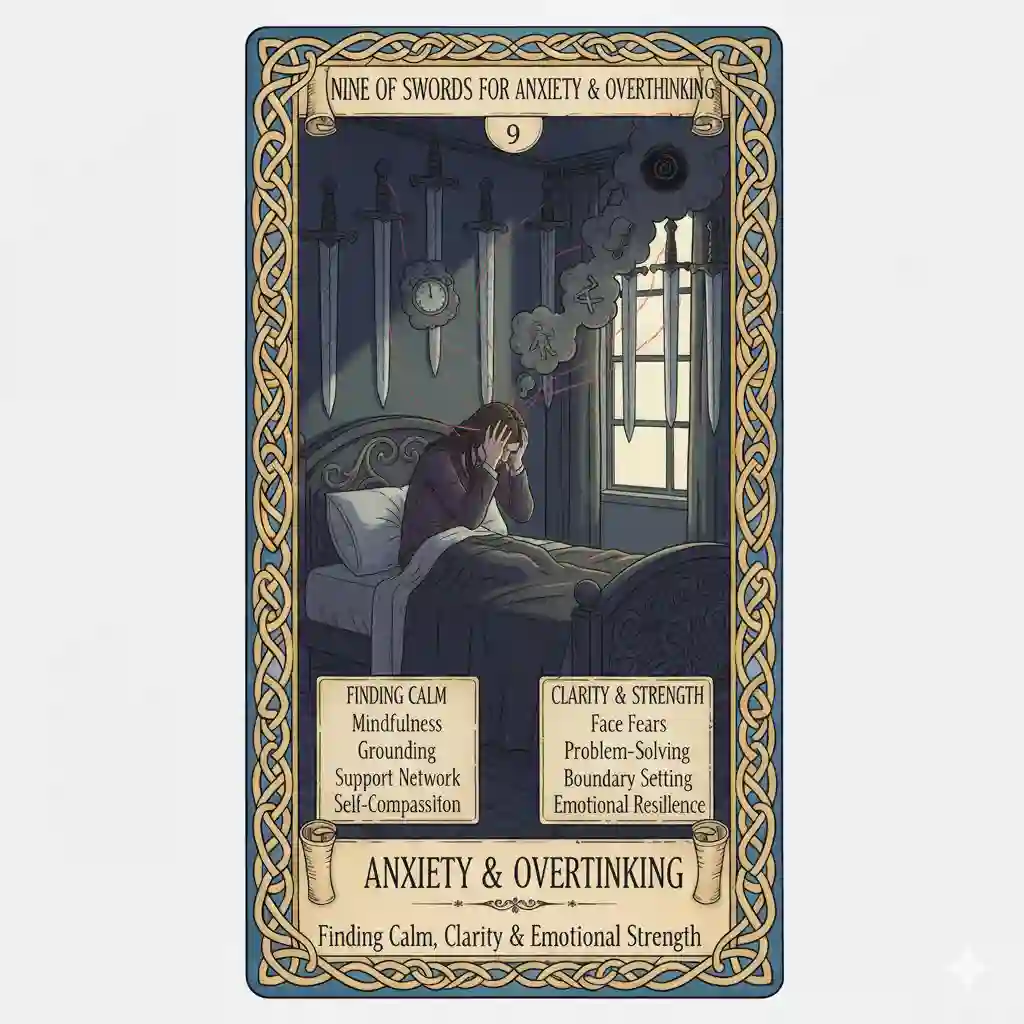
Often called the “nightmare card,” its imagery can be unsettling—a figure sitting up in bed, face buried in hands, seemingly in distress. But viewing this card solely as a symbol of doom misses its most vital message. The Nine of Swords is the ultimate guide to understanding mental overload. It appears not to predict tragedy, but to validate your struggle with overthinking, guilt, and fear.
This guide is designed to help you navigate the stormy waters of the mind. By exploring the Nine of Swords for anxiety and overthinking, we move beyond fear and toward understanding. We will look at how this card serves as a diagnostic tool for your emotional state and offers a roadmap back to calm, clarity, and strength.
Core Meaning of the Nine of Swords
To understand how this card aids in emotional healing, we must first look at its symbolism. In the Rider-Waite deck, nine swords hang on the wall behind the figure, representing the heavy weight of negative thoughts. The scene is dark, symbolizing the isolation we feel when trapped in our own heads.
Upright Meaning
Upright, the Nine of Swords represents mental anguish, sleeplessness, and the overwhelming burden of worry. It suggests that your mind is working in overdrive, often blowing problems out of proportion. It highlights the cycle of rumination—where thoughts spin endlessly without resolution.
Reversed Meaning
Reversed, the card often points to a recovery phase or, conversely, deep denial. It can indicate that you are ready to reach out for help or that you have been burying your stress so deep that it’s manifesting as physical exhaustion.
The emotional lesson here is profound: pain is inevitable, but suffering is optional. The swords are on the wall, not touching the figure. This implies that while the threat feels real, it is largely mental.
For a deeper dive into the traditional symbolism, explore our full Nine of Swords tarot card meaning.
Nine of Swords as a Symbol of Anxiety
Anxiety is often described as a fear of the future or a regret about the past, preventing us from living in the present. The Nine of Swords perfectly encapsulates this displacement of time.
Triggers of Worry
The card asks us to identify what actually triggered the anxiety. Was it a specific event, or a slow accumulation of unexpressed feelings? The swords represent thoughts that “cut”—harsh self-criticism, “what if” scenarios, and catastrophic thinking.
The Mind-Body Connection
Notice the posture of the figure in the card: head in hands, sitting up in bed. This is somatic tension. Anxiety isn’t just a mental state; it lives in the body. The Nine of Swords highlights the physical toll of stress—tight shoulders, headaches, and specifically, the disruption of sleep. It serves as a reminder that to heal the mind, we must often start by soothing the body.
Overthinking and Rumination
Overthinking is the engine that powers the Nine of Swords. It is the act of analyzing a situation until it loses all meaning or becomes a source of terror.
What Overthinking Looks Like
In daily life, this manifests as:
- Rehearsing arguments in the shower.
- Reading a text message ten times to decipher a hidden “tone.”
- Creating detailed disaster plans for unlikely scenarios.
Breaking the Cycle
The Nine of Swords shows us that thinking harder will not solve the problem. The swords are arranged in a ladder-like formation, suggesting a way out if we choose to look up rather than hide. Awareness is the first step. When you catch yourself in a Nine of Swords moment, acknowledge it: “I am ruminating right now.” naming the monster often shrinks it.
Upright vs Reversed Nine of Swords
The orientation of the card offers nuanced guidance on how you are processing your anxiety.
Upright: Active Distress
When upright, the anxiety is conscious and present. You know you are stressed. You are likely losing sleep and feeling the weight of guilt or shame. The guidance here is immediate intervention: talk to someone, write it down, get it out of your head.
Reversed: Hidden Struggle
Reversed, the anxiety might be internalized. You might be smiling through the day but crashing hard at night. It can also suggest denial—refusing to look at the swords on the wall. Alternatively, a reversed Nine of Swords can be a hopeful sign that the worst is over, and you are beginning to see the light of dawn after a long, dark night.
Emotional Self-Care Practices Inspired by the Nine of Swords
You don’t have to stay trapped in the bed. Here are actionable self-care steps inspired by the card’s energy.
Journaling Anxiety Triggers
The swords represent words and thoughts. Counteract them with your own words.
- Prompt: “What is the worst-case scenario my brain is constructing? Is it true?”
- Prompt: “If a friend were in this situation, what comforting advice would I give them?”
Mindfulness Meditation
The figure is covering their eyes, blocking out reality. Mindfulness asks us to uncover our eyes and observe. Practice “Thought Labeling.” When a worry arises during meditation, simply label it “thinking” or “worrying” and return to your breath. This creates distance between you and the sword.
Setting Boundaries for Mental Space
The dark background suggests a need for containment. Set boundaries with your own mind. Allocate “Worry Time”—a specific 15-minute window where you are allowed to worry as much as you want. When the timer goes off, the worry session is closed for the day.
Coping Strategies for Nighttime Worry
Since the Nine of Swords is the card of insomnia, tackling nighttime anxiety is crucial.
Sleep Hygiene as Ritual
Treat your bedtime routine as a sacred ritual of protection. Remove screens (blue light mimics the stimulating energy of swords/air). A warm bath or a heavy blanket can ground the airy, frantic energy of the swords.
The “Brain Dump”
Keep a notebook by your bed. If you wake up with a racing mind, write the thoughts down immediately. Tell your brain: “It is written down. We can deal with this in the morning. You don’t have to hold it anymore.”
Transforming the Imagery
Visualize the swords on the wall turning into feathers or flowers. It sounds simple, but actively reimagining the symbols of your fear can reduce the brain’s threat response.
Supporting Tarot Cards for Anxiety Relief
When the Nine of Swords appears, look for these cards as allies in your healing.
- Temperance: This card brings balance and moderation. It suggests cooling the heat of anxiety with patience and self-regulation.
- The Star: The ultimate card of hope and healing. Following the darkness of the Tower (and the stress of the Swords), the Star promises renewal and peace.
- Strength: Reminds you that you have the inner fortitude to tame the “beast” of panic. It speaks to gentle, compassionate control.
- The Hermit: Encourages withdrawing from the noise of the world to find your own inner light. It validates the need for quiet introspection without the panic.
Cards That Indicate Heightened Anxiety
Sometimes the Nine of Swords appears with other cards that amplify the message of stress.
- Five of Pentacles: Indicates worry specifically about money, resources, or feeling left out in the cold. It grounds the anxiety in material survival.
- Ten of Wands: Suggests burnout. You are anxious because you are carrying too much. The solution is delegation, not just meditation.
- Seven of Cups: The card of illusion and choices. It suggests anxiety stemming from confusion or “analysis paralysis”—too many options and no clear path.
Integrating the Nine of Swords Into Daily Emotional Awareness
We can use the wisdom of this card proactively, not just when we are in crisis.
- Morning Check-In: Ask yourself, “What is the quality of my thoughts this morning?” If the swords are present, prioritize calming activities immediately.
- Mindful Decision Making: When stressed, pause. Ask, “Am I making this decision out of fear (Nine of Swords energy) or out of clarity?”
- Gratitude for Safety: The figure in the card is safe in bed, despite the mental turmoil. Remind yourself daily: “I am safe right now. The danger is a thought, not a tiger.”
Nine of Swords in Dreams
If you dream of this card or its imagery (being trapped, surrounded by sharp objects, endless darkness), your subconscious is trying to process unexpressed emotions.
Interpreting Anxiety Dreams
These dreams are release valves. They are not prophecies of doom. They are your brain’s way of “taking out the trash.”
- Nighttime Fear Symbols: Identify the source of fear in the dream. Is it a person? A monster? A vague shadow? Facing the monster in the dream (lucid dreaming) or rewriting the ending while awake can be powerful therapy.
How Tarot Helps in Mental Health Awareness
It is crucial to frame tarot correctly when dealing with mental health.
Reflection, Not Therapy
Tarot is a mirror, not a doctor. It reflects your current state and offers spiritual perspective. It is not a substitute for professional mental health care. If the Nine of Swords energy feels unmanageable, it is a sign to seek a therapist.
Empowerment
Tarot empowers you by externalizing the problem. Instead of “I am anxious,” you see “I am experiencing Nine of Swords energy.” This slight linguistic shift helps you witness the emotion rather than become it.
What the Nine of Swords Does NOT Promise
- Instant Relief: Awareness is the first step, but shifting anxiety patterns takes time.
- Avoidance: The card asks you to face the swords, not hide under the covers forever.
- Automatic Solutions: You must do the work—the breathing, the boundaries, the therapy. The card points the way, but you must walk the path.
FAQs — Nine of Swords & Anxiety
Can the Nine of Swords help reduce overthinking?
Yes, by bringing awareness to it. Recognizing the card as a symbol of your current mental state snaps you out of the loop and helps you realize, “I’m doing that thing again.”
How do I interpret it in readings about fear?
It usually means the fear is worse than the reality. The situation is likely not as catastrophic as your mind is making it out to be.
Can it suggest ways to sleep better?
Indirectly, yes. It highlights that unresolved mental stress is the cause of insomnia, pointing you toward journaling and relaxation techniques before bed.
Is it a warning about emotional burnout?
It can be. If you ignore the Nine of Swords, it can lead to the Ten of Swords—complete exhaustion and collapse.
How to combine it with other cards for mental clarity?
Look for Aces (new perspectives) or the Queen of Swords (clear, unbiased thinking). They offer the antidote to the confusion of the Nine.
Can it guide therapy or journaling exercises?
Absolutely. Bring the card to therapy. Tell your therapist, “I feel like this image.” It’s a powerful shorthand for complex feelings.
Does it ever indicate positive personal insight?
Yes. It can mark the “darkest hour before the dawn,” a necessary breakdown of old ego structures before a breakthrough in understanding.
How do I use it to face guilt or regret constructively?
Acknowledge the regret represented by the swords. Ask, “What can I learn from this?” then visualize taking that sword down from the wall and laying it to rest.
Conclusion
The Nine of Swords for anxiety and overthinking is a challenging but ultimately redemptive archetype. It does not appear to scare you; it appears to wake you up. It is a compassionate witness to your pain, reminding you that while your suffering is valid, it does not have to be permanent.
By using this card as a prompt for journaling, mindfulness, and honest self-assessment, you can begin to dismantle the wall of swords one by one. You can move from the nightmare of the Nine to the hope of the Star. Remember, you are the dreamer, not the dream. You have the power to wake up, breathe, and find your calm again.
For more insights on navigating your inner landscape, explore our guide on Tarot for emotional healing.